Subgenre guide
What is sword and sorcery?
A fast, personal and often dangerous kind of fantasy: one hero, one blade, and magic that is usually more threat than gift.
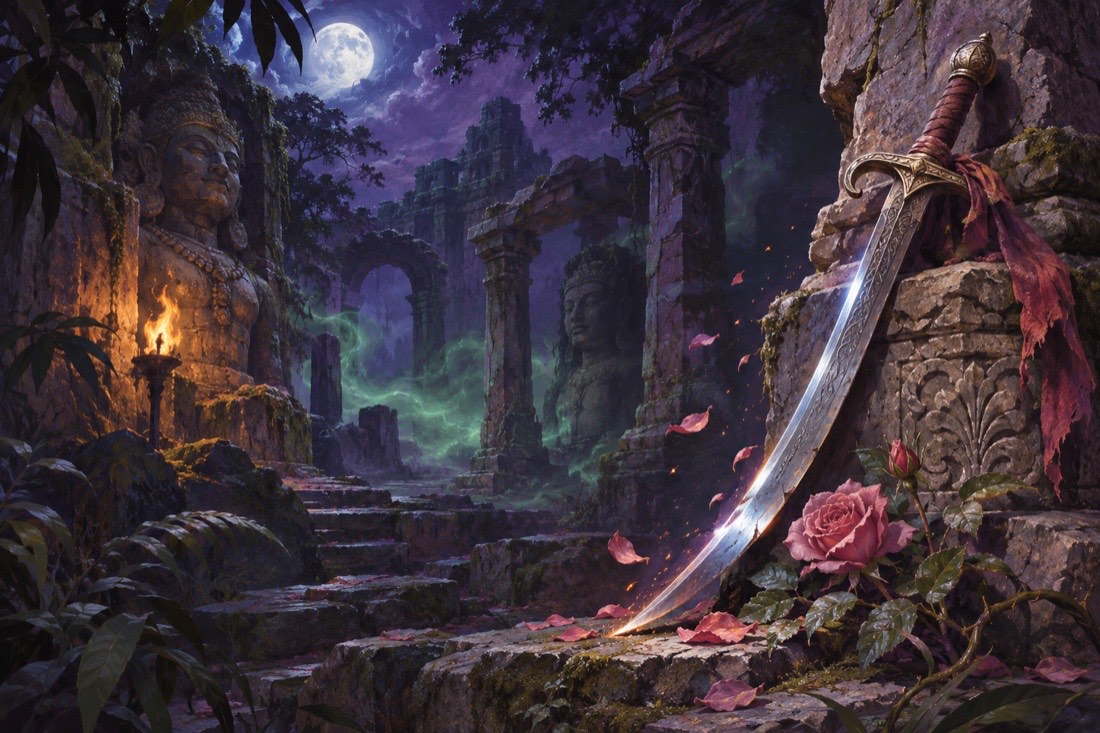
What sword and sorcery means
Sword and sorcery, often shortened to S&S and also called heroic fantasy, is a branch of fantasy fiction about warriors, thieves and wanderers who survive by their wits and their weapons. The hero is rarely a chosen king. More often it is an outsider: a mercenary, a barbarian, a rogue, a swordswoman with debts to pay. The story follows what happens to that person, not the fate of the whole world.
The second half of the name matters just as much. Sorcery in these stories tends to be old, strange and costly. Wizards are frequently the villains, temples hide things that should stay buried, and a spell is something the hero endures rather than learns. That gives the genre its typical flavour: steel against the uncanny.
Where the name came from
The phrase appears in print at least as early as 1953, in the headline of a book review. It became a label for the field in 1961. That year the British writer Michael Moorcock asked, in the fanzine Amra, for a name for the kind of fantasy adventure Robert E. Howard had written. Moorcock first suggested "epic fantasy". The American author Fritz Leiber answered in the fanzine Ancalagon and proposed "sword-and-sorcery" as a good popular catchphrase, then argued for it again in Amra that July. Leiber's point was that the name captured both the pre-modern setting and the supernatural element, and set the stories apart from historical swashbucklers.
Pulp origins in the 1930s
Weird Tales and the first barbarian
Most histories of the genre start with Robert E. Howard and the pulp magazine Weird Tales. In 1932 the magazine published "The Phoenix on the Sword", the story that introduced Conan, and readers liked it enough that more Conan tales followed in its pages. Howard built on earlier adventure writing, historical swashbucklers and the weird fiction of his time, and that mix of action and horror became the template.
The first generation
Other writers soon worked in the same space. Clark Ashton Smith wrote dark tales of ancient and far-future lands. C. L. Moore created Jirel of Joiry, usually described as the first sword and sorcery heroine. Fritz Leiber began the adventures of Fafhrd and the Gray Mouser, a pair of rogues whose stories lean on humour and character. After the pulps faded, Jack Vance's The Dying Earth (1950) carried a similar spirit into book form, with rogues and wizards on a decadent future Earth.
The paperback boom and its rebels
In the 1960s many new books followed the Conan pattern closely. Michael Moorcock's Elric stories went the other way on purpose: a frail, brooding sorcerer-king instead of a muscled barbarian. That tension between imitation and reinvention has followed the genre ever since.
Hallmarks of a sword and sorcery story
- Personal stakes. The hero fights for survival, treasure, revenge or a friend, rarely to save the realm.
- Short and fast. Many classics are short stories or novellas, told episode by episode.
- Morally grey people. Thieves, mercenaries and exiles who keep their own code.
- Dangerous magic. Sorcery is rare, corrupting and usually in the wrong hands.
- Strange places. Ruined cities, lost temples, smoky taverns and crowded back alleys.
- A pre-modern world. Swords, bows and ships, no gunpowder and no modern state.
Is sword and sorcery still popular?
It never fully went away. The classic stories stay in print and in libraries, the genre shapes tabletop role-playing games and films, and new writers keep publishing short fiction and novels in the tradition, often with more varied heroes than the pulps had. It is a smaller shelf than epic fantasy or romantasy, which is part of its charm: you can read the core classics in a season.
Where to start
Sword and sorcery suits readers who want adventure without a ten-volume commitment. Begin with short stories or a collection, read one or two classic episodes, then try a modern novel. If you are unsure how it differs from the big quest stories, read our comparison of sword and sorcery vs high fantasy, and see where it sits among the fantasy subgenres. New to the whole genre? Our guide on how to start reading fantasy has a simple path.